
How Long Does a Website Actually Take to Build?
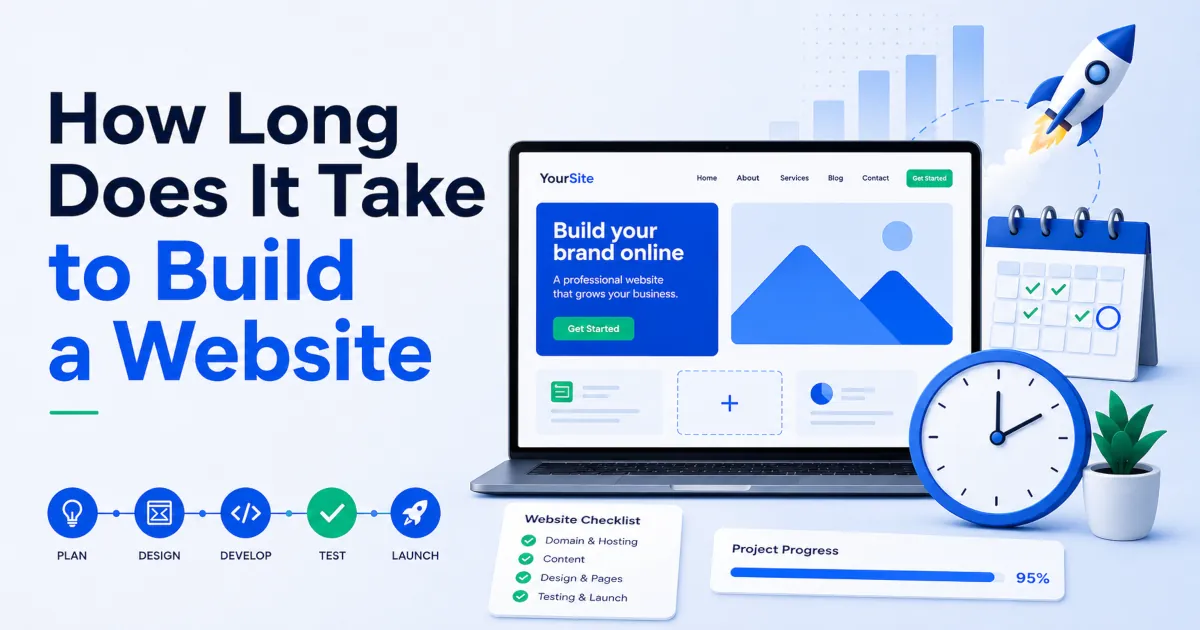
The honest answer is that building the site is rarely the slow part.
The build itself is measured in days. What stretches a project is the waiting in between: decisions, content, and how quickly feedback comes back.
The Short Answer
From the day you accept the proposal to the day the site goes live, a small site takes five to ten days, a larger site takes ten to twenty days, and an online shop takes ten to thirty days. Shops sit at the wider end because products, payments, postage rules and tax all have to be right before anyone can buy anything.
A larger shop, or any site with extensive integrations or setup work, usually adds around another quarter on top of that.
Every proposal we send carries an estimated timeframe for your specific project, so you are working from a date rather than from a range on a blog. Timescale and budget are separate questions, and we have written about what a website costs in Hertfordshire as well.
What Else Can Move the Date
Work that sits alongside the build rather than inside it. If you need content written, a logo or graphics designed, or video produced, each of those is its own job with its own timeline, and each one adds to the total.
Content Is Usually What Holds a Build Up
Nearly every overdue website we have seen was waiting on the same thing: text, photographs, a logo file nobody can find, or a decision about what the business actually wants to say.
This is not a criticism of clients. Writing about your own business is genuinely hard, and it lands on top of the job you already do. If you would rather not do it, we write content as well, and then it goes into the plan from the start instead of stalling it halfway through.
What Those Days Actually Contain
The first conversation is questions. What the site is for, who it is for, what you want someone to do when they arrive, and what you are competing against. Getting that wrong is expensive later.
Design comes next, usually as real working pages rather than flat pictures of pages, so you are looking at the thing itself. Then the build, then testing on real devices, then a round of changes, then launch.
What Makes It Take Longer
Scope that grows after the start. A booking system, a members area or a shop added halfway through is a new project sitting on top of the old one, and it moves the finish date.
Slow feedback compounds as well. A three day gap on each of five review rounds is over two weeks on its own, on a build that might only have needed ten days.
What Makes It Faster
Have one decision maker. Gather your photographs and text before the start rather than during. Say what you do not like as clearly as what you do, because a vague round of feedback usually needs a second round just to interpret it.
How We Work
You get an estimated timeframe in writing before you commit to anything, and we tell you what we need from you and when. If content is the blocker we say so early rather than quietly letting the date slide.
We also build without page builders, which means the site is fast on the day it launches rather than needing a speed rescue six months later.